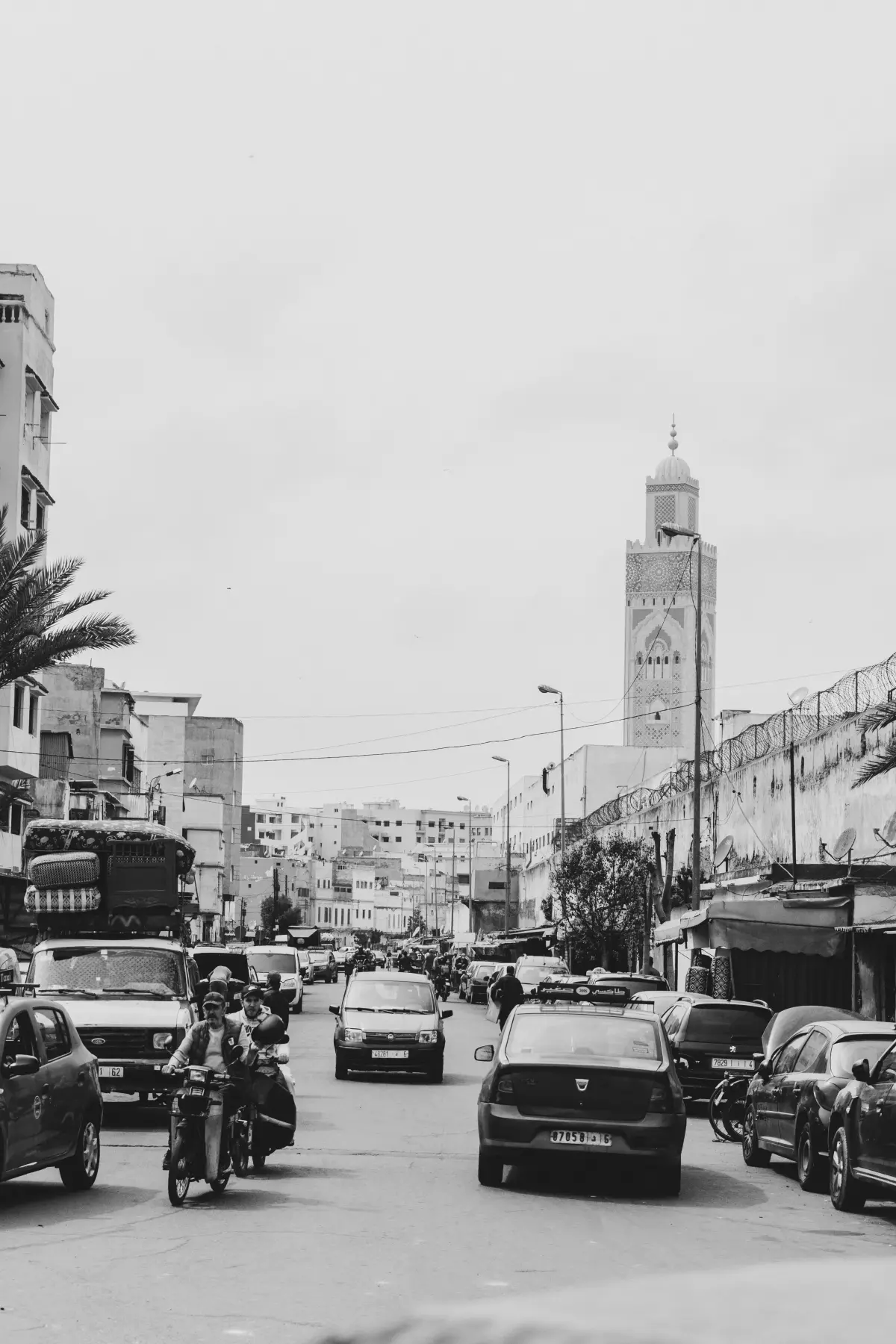

Things to Do in Casablanca: 12 Places Worth Your Time
Casablanca is not a typical Moroccan tourist destination, and that’s precisely what makes it interesting.
There’s no ancient medina packed with carpet sellers, no snake charmers, and no UNESCO-certified souks. What you get instead is a 20th-century Atlantic city — coastal, cosmopolitan, architecturally unusual — that most visitors rush through without stopping to look properly.
This guide covers the 12 things in Casablanca that actually repay your attention, from the unmissable to the genuinely overlooked.
| Quick Overview | |
|---|---|
| Best for | Architecture, coastal walks, cultural history |
| Recommended stay | 1–2 days |
| Currency | Moroccan Dirham (MAD) |
| Getting around | Red petit taxis, CasaTramway |
Top Landmarks in Casablanca
1. Hassan II Mosque
- What it is & Why visit: One of the largest mosques in the world, built partially over the Atlantic Ocean. Its minaret is the tallest religious structure on earth. More importantly for visitors: it is one of the very few mosques in Morocco that non-Muslims are legally permitted to enter — which makes it a genuinely rare experience in the region.
- Price: Foreign adults ~140 MAD, students ~70 MAD, children under 6 free. [VERIFY CURRENT PRICE at fmh2.ma before visiting.]
- Opening hours: Guided tours typically run at 09:00, 10:00, 11:00, 12:00, 15:00, 16:00 (Sat–Thu). Friday hours differ. [VERIFY CURRENT SCHEDULE at fmh2.ma — times change during Ramadan and religious holidays.]
- How long to spend: 1.5 to 2 hours.
- Insider Tip: Bring socks — shoes must be removed before the prayer hall and the marble floors are cold in winter. Arrive 30 minutes before your chosen tour slot; tickets are at the door and tours fill quickly in peak season.
2. Mohammed V Square & the Art Deco Quarter
- What it is & Why visit: The administrative heart of the city, surrounded by colonial-era buildings in a hybrid Neo-Moorish and Art Deco style. Casablanca has one of the largest concentrations of early 20th-century Art Deco architecture in the world — most visitors drive past it without realising.
- Price: Free to explore on foot.
- Opening hours: 24/7, best visited in daylight.
- How long to spend: 1 hour self-guided walk.
- Insider Tip: Walk south from the square along Boulevard Mohammed V toward the Gauthier district. Look up at the upper floors — ornate balconies, geometric friezes, and decorative tile from the 1930s and 40s appear on otherwise ordinary-looking buildings. No tour required.
3. Quartier Habous (The New Medina)
- What it is & Why visit: Built by the French in the 1930s as a planned residential quarter, the Habous is what a medina looks like when it’s designed rather than grown organically. The arcaded streets are walkable, the shops calmer than the Old Medina, and the quality of craft goods higher.
- Price: Free to enter and explore.
- Opening hours: Most shops open 9:00 AM – 6:00 PM. Some close midday.
- How long to spend: 1.5 to 2 hours.
- Insider Tip: Pâtisserie Bennis Habous on Rue Fkih El Gabbas is widely considered by Casaouis to be the best traditional pastry shop in the city. The briouat and fekkas are worth the stop, and there’s no tourist markup.
Culture & Museums
4. Mahkama du Pacha
- What it is & Why visit: A stunning 1940s administrative building inside the Habous Quarter, with 64 rooms decorated in hand-carved cedar, zellij tiling, and ornate ironwork that rivals anything in Fes. It’s rarely on standard itineraries, which keeps it quiet.
- Price: Technically free, but access can be inconsistent — the building is still partially in official use. Asking the guard politely is often enough.
- Opening hours: Variable; weekday mornings tend to be more reliable for access.
- How long to spend: 45 minutes.
- Insider Tip: If you’re already in the Habous (and you should be), this is a five-minute detour. Don’t skip it over uncertainty — most visitors who ask are let in.
5. Museum of Moroccan Judaism
- What it is & Why visit: The only Jewish museum in any Arab country. Morocco was home to one of the largest Jewish communities in the world before the emigrations of the 20th century. This small, well-curated museum traces that history through religious objects, textiles, photographs, and personal documents. It’s genuinely unique.
- Price: [VERIFY CURRENT PRICE against official source — previously around 50 MAD.]
- Opening hours: [VERIFY CURRENT HOURS — previously Mon–Fri 10:00–18:00, closed weekends and Jewish holidays.]
- How long to spend: 45 minutes to 1 hour.
- Insider Tip: The museum is not in a tourist area — you’ll need a petit taxi to reach it in the Oasis district. That also means it’s quiet. Worth it for anyone interested in Maghrebi history beyond the standard narrative.
6. Sacré-Cœur Cathedral (Cultural Centre)
- What it is & Why visit: A striking 1930 Art Deco church that closed as a Catholic cathedral decades ago and now operates as a cultural centre hosting exhibitions and events. The exterior is architecturally distinctive and the interior holds occasional art shows.
- Price: Free or nominal entry depending on current exhibition.
- Opening hours: [VERIFY CURRENT HOURS — variable depending on programming.]
- How long to spend: 20–30 minutes.
- Insider Tip: Check what’s on before visiting — the exterior is always accessible and makes a good photography stop regardless.
Neighborhoods Worth Exploring
7. Old Medina
- What it is & Why visit: Casablanca’s original historic quarter. Smaller and less elaborate than Fes or Marrakech — whitewashed walls, narrow lanes, local market stalls, and a working-neighbourhood atmosphere rather than a polished tourist experience.
- Price: Free.
- Opening hours: Best visited 9:00 AM – 5:00 PM.
- How long to spend: 45 minutes to 1 hour.
- Insider Tip: The Old Medina is well-positioned between the Hassan II Mosque and the city centre — treat it as a connective walking route rather than a standalone destination. Don’t expect the depth of Fes; do expect something authentic.
Old Medina vs Habous — what’s the difference? The Old Medina is organic and unplanned. The Habous was built by the French as a controlled interpretation of a traditional quarter. For shopping and easy navigation, Habous is better. For atmosphere and local life, the Old Medina.
8. Gauthier District & Villa des Arts
- What it is & Why visit: A residential and commercial neighbourhood west of the city centre, known for its Art Deco residential buildings, neighbourhood cafés, and the Villa des Arts — a 1934 Art Deco villa now used as a contemporary Moroccan art gallery.
- Price: Villa des Arts entry is free or very low cost. [VERIFY CURRENT ADMISSION at villa-des-arts.ma]
- Opening hours: [VERIFY CURRENT HOURS for Villa des Arts.]
- How long to spend: 1 hour walking the district; add 45 minutes for the Villa.
- Insider Tip: The walk through Gauthier itself is the point — look at the residential buildings, not just the gallery.
Coastal Casablanca
9. La Corniche & Ain Diab
- What it is & Why visit: The oceanfront promenade through Ain Diab, lined with palms, beach clubs, and cafés. Popular with locals for morning runs, evening walks, and weekend visits. The energy is completely different from the city centre — relaxed and coastal.
- Price: Free to walk. Beach clubs charge variable entry fees.
- Opening hours: Open 24/7. Most animated from late afternoon onwards and on weekends.
- How long to spend: 1.5 to 2 hours, more if you’re eating dinner here.
- Insider Tip: Walk to the Phare El-Hank lighthouse at the western end of the Corniche — built in 1916, it’s a good photography spot and one of the quieter parts of the waterfront.
10. Marché Central
- What it is & Why visit: A covered market in the city centre known for its fresh seafood stalls, produce vendors, and surrounding restaurants. A popular lunch spot for locals and a genuinely lively market to walk through.
- Price: Free to enter. Adjacent restaurants range from 80–250 MAD per person.
- Opening hours: Roughly 7:00 AM – 2:00 PM. Closes early on Sundays.
- How long to spend: 30 minutes to browse, longer for lunch.
- Insider Tip: Seafood at market-adjacent restaurants is often priced by weight. Ask to see the fish before it’s cooked and confirm the price per 100g before ordering. This avoids the most common bill surprise in Casablanca.
11. Rick’s Café
- What it is & Why visit: A restaurant built to recreate the piano bar from the 1942 Humphrey Bogart film — which was filmed entirely in Hollywood and has no actual connection to Casablanca. It’s a tourist destination, it knows it, and it executes the concept well. The cocktails are good, the live jazz is real, and the riad-style interior is genuinely atmospheric.
- Price: High-end. Dinner around 300–500 MAD per person. Lunch is slightly more accessible.
- Opening hours: 12:00 PM – 3:00 PM (lunch), 6:30 PM – 1:00 AM (dinner). [VERIFY CURRENT HOURS.]
- How long to spend: 1.5 to 2 hours.
- Insider Tip: Reservations are essential, particularly during peak season — book at least a week ahead. There’s a dress code: no shorts, no sandals.
Practical Tips
Getting Around
Casablanca is large. Walking between major attractions is usually impractical.
- Petit taxis (red): The standard option. Always insist on the meter — say “l-compteur, 3afak”. If the driver refuses, find another cab. Short city-centre rides should cost 15–30 MAD.
- CasaTramway: Connects key city areas and runs to Ain Diab. Tickets cost around 8 MAD. [VERIFY CURRENT FARE.]
- Walking: Works well within the Old Medina, around Mohammed V Square, and in the Habous Quarter — but not between these areas.
What to Skip
- Morocco Mall: A very large shopping mall. It adds nothing to a short Casablanca visit unless you specifically want shopping.
- Generic hop-on/hop-off tours: Casablanca’s layout doesn’t suit this format. Petit taxis give you more control.
Frequently Asked Questions
How many days do you need in Casablanca? One to two days covers the main highlights at a reasonable pace. One focused day works if you prioritise the Hassan II Mosque, Habous Quarter, and La Corniche. See our 1-day Casablanca itinerary for a detailed route.
Is Casablanca safe for tourists? Yes, with standard urban precautions. Keep your phone out of sight near busy roads (snatch-and-grab from motorcycles does occur), use licensed petit taxis, and be aware of your surroundings in the Old Medina at night. It’s a large modern city — not a particularly risky one.
Can non-Muslims visit the Hassan II Mosque? Yes — it is one of the very few mosques in Morocco that officially permits non-Muslim visitors. Entry is by guided tour only. Modest dress is required (shoulders and knees covered) and shoes must be removed before the prayer hall.
Is Casablanca worth visiting or should I skip it? Worth a stop of one to two days, particularly for the Hassan II Mosque and the Art Deco architecture. It works well as an arrival or departure city — the airport train connects directly to the city centre in about one hour. For a full overview of the city, read our Casablanca travel guide.
What is the best area to stay in Casablanca? The city centre near Mohammed V Square is practical for sightseeing. Ain Diab suits visitors who prefer an oceanfront location, though you’ll need taxis to reach the central attractions.