Chefchaouen, Morocco Travel Guide: Things to Do & Practical Tips
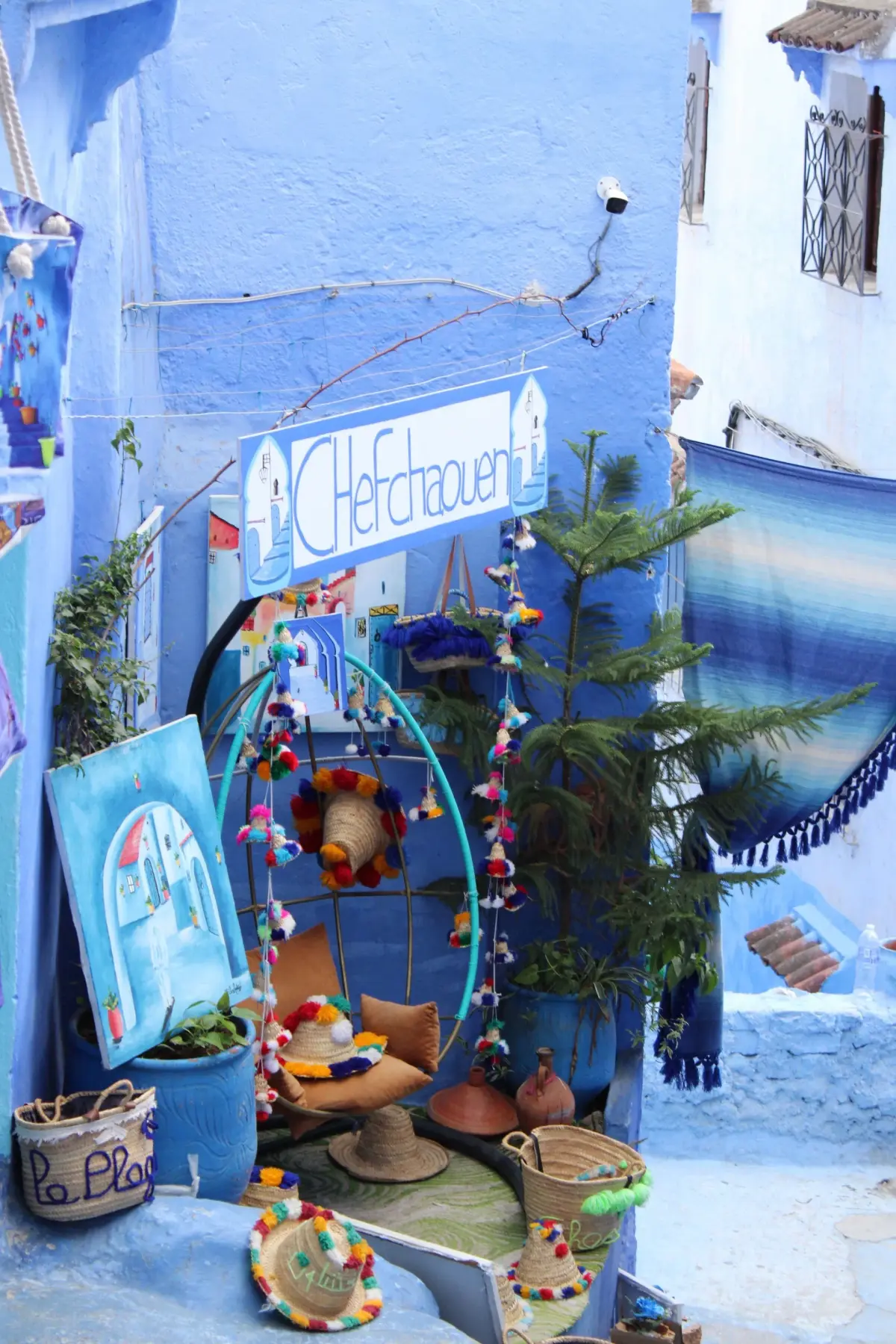
Chefchaouen is arguably the most visually striking town in North Africa. Tucked into the steep slopes of the Rif Mountains, its medina is famously washed in hundreds of shades of blue.
Thanks to social media, the “Blue Pearl” has transitioned from a quiet backpacker hideaway into a global tourism phenomenon. But beneath the carefully framed photographs lies a real, functioning mountain town with its own distinct culture and practical challenges.
This guide strips away the aesthetic filters to give you the honest, practical reality of visiting Chefchaouen — how to navigate its steep hills, where to stay, and how to handle the inevitable mountain hustle.
Quick Overview: Chefchaouen at a Glance
| Best for | Photography, relaxed mountain atmosphere, buying local textiles |
| Recommended stay | 1–2 days |
| Best time to visit | Spring (April–May) and Autumn (September–October) |
| Accessibility | Poor. The medina is built on a steep hill with uneven cobblestones and many stairs. |
| Language | Arabic, Darija, and Spanish (more common here than French due to history). |
Why is Chefchaouen Blue? (The Competing Theories)
There are several competing theories about why the town is painted blue, and the precise origin remains a subject of debate among historians and locals alike.
- The Spiritual Theory: The most widely cited history suggests that Jewish refugees fleeing Europe (either during the Spanish Inquisition or in the 1930s) brought the tradition of painting homes blue to mirror the sky and symbolize the presence of God.
- The Practical Theories: Many locals argue the blue hue was chosen simply because it helps keep homes cooler during the intense summer heat, or because the color is believed to act as a natural repellent for mosquitoes.
Regardless of its original intent, the blue paint has become the town’s defining feature. Today, it is widely reported that local officials encourage and sometimes supply the pigment to residents to maintain the aesthetic, as the town’s tourism economy relies heavily on it remaining pristine.
What to Expect: The Vibe & The Hustle
The atmosphere in Chefchaouen is noticeably more relaxed than the intense, fast-paced medinas of Marrakech or Fes. Shop owners are generally less aggressive, and the mountain air gives the whole town a slower pace.
Is Chefchaouen Safe?
Chefchaouen is generally considered a relatively easy destination to explore, but normal travel precautions still apply. Violent crime against tourists is extremely rare, and you can walk around the main medina areas in the evening comfortably. The primary annoyances are petty hustle and navigation.
The Rif Mountain Reality (Cannabis)
The Rif Mountains are a major agricultural region for cannabis (known locally as kif). Visitors may encounter offers to buy cannabis, particularly in tourist-heavy areas.
A brief, polite refusal (“La shukran”) and continuing on your way is usually the simplest response. It is important to note that while you may observe informal local tolerance, recreational cannabis use remains illegal in Morocco under strict national laws, and purchasing it carries significant legal risks for tourists.
Top Things to Do in Chefchaouen
The joy of Chefchaouen lies in exploring its distinct zones. Here is an overview of the key areas:
Inside & Around the Medina
Unlike Fes, where you might need a guide, Chefchaouen is perfect for aimless wandering.
- Bab El Ain: The main gateway into the old city.
- The Blue Streets: Getting lost in the painted residential alleys is the primary attraction.
- Plaza Uta el-Hammam: The central square lined with cafés, perfect for mint tea and people-watching.
- The Kasbah: Located right in the main square, this 15th-century fortress houses a small ethnographic museum and a beautiful garden.
- Ras El Maa: The natural spring just outside the eastern medina walls where locals gather and wash clothes.
For the View
- The Spanish Mosque: A ruined white mosque sitting on a hill opposite the town. The 30-minute hike up from the medina gates provides the definitive panoramic view of the entire blue city. It is especially beautiful at sunset.
Outside Chefchaouen (Day Trips)
- Akchour Waterfalls: Located about 45 minutes away by taxi in the Talassemtane National Park, this is a stunning hike to deep blue pools and the famous “God’s Bridge” rock formation.
See our complete guide to the 15 Best Things to Do in Chefchaouen →
Ethical Photography in the Blue City
This is perhaps the most important section of this guide. The medina is not a museum; it is a residential neighborhood where families live, work, and sleep.
To be a responsible visitor, follow these guidelines:
- Do not photograph open doors: If a house door is open, someone is inside. Do not point your camera into their private space.
- Ask before photographing people: Always ask before photographing residents, and respect a refusal.
- Don’t block the alleys: The narrow streets are thoroughfares. Be mindful of local foot traffic and do not block paths for extended periods to set up a photoshoot.
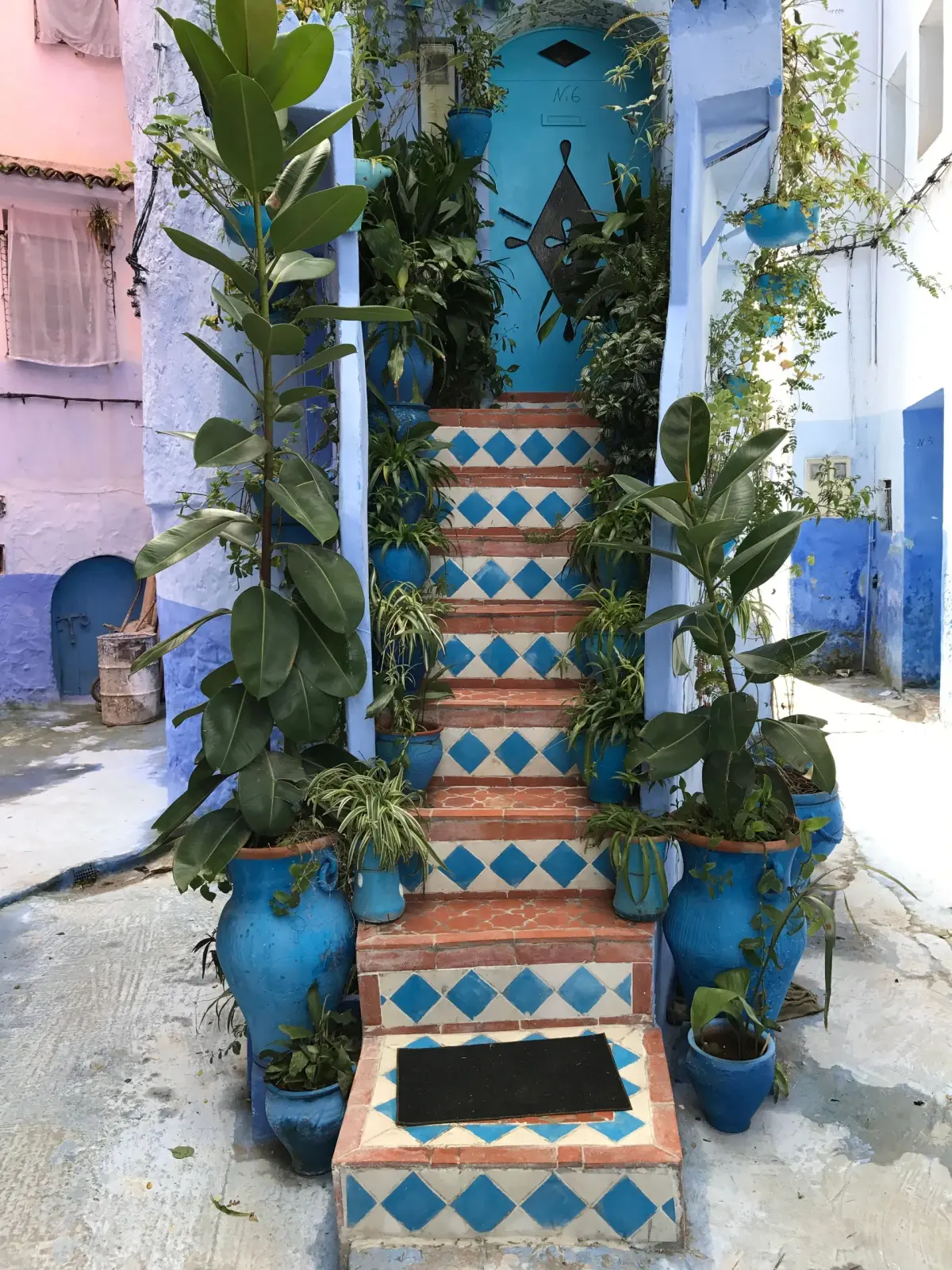
- The “Paid” Photo Spots: Some residents have decorated their private patios or staircases specifically for tourists. Expect to pay a small fee of 5 to 10 MAD for the right to pose in these curated spots. This is a fair exchange that supports the locals whose homes make up the attraction.
Practical Planning Information
Best Time to Visit
The mountain climate varies significantly by season:
| Season | Weather & Conditions |
|---|---|
| Spring (Mar-May) | Ideal. Pleasant temperatures for hiking, green landscapes, and comfortable medina walking. |
| Summer (Jun-Aug) | Hot and crowded. Inland heat drives Moroccan vacationers and international tourists to the mountains. |
| Autumn (Sep-Nov) | Excellent. Mild weather and softer light for photography. |
| Winter (Dec-Feb) | Cold and wet. Many traditional riads lack central heating, making the nights freezing. Pack accordingly. |
Accessibility and Physical Demands
Be warned: Chefchaouen is built on the side of a mountain. Almost every alleyway involves walking uphill on uneven cobblestones or climbing steep stone stairs. If you or your travel companions have mobility issues, bad knees, or require a stroller or wheelchair, the medina will be extremely difficult to navigate.
Budgeting for Chefchaouen
Due to its popularity, food prices in the main tourist squares are comparable to Marrakech. However, you can control your budget depending on where you eat:
| Dining Level | What to Expect | Estimated Cost (per person) |
|---|---|---|
| Budget | Local cafés, simple street food, bissara (bean soup), sandwiches | 20 – 50 MAD |
| Mid-Range | Tourist restaurants, rooftop cafés, traditional tagines | 80 – 160 MAD |
| Higher-End | Premium riad dining, refined Moroccan cuisine | 200 – 350+ MAD |
Health & Safety (Tap Water)
While the local water comes from mountain springs, travelers with sensitive stomachs should stick to bottled water to avoid any risk of traveler’s diarrhea.
Where to Stay in Chefchaouen
Choosing where to stay depends entirely on your mobility and luggage.
1. Deep Inside the Medina: Staying in a traditional riad deep in the blue streets offers the best atmosphere. However, taxis cannot enter. You will have to carry your luggage (or hire a local porter) up steep stairs and uneven alleys to reach your door.
2. Near the Medina Entrances (Bab El Ain / Ras El Maa): This is the best compromise. You are still in the old city, but you can be dropped off by a taxi within a 2-to-3-minute walk of your accommodation, saving you a difficult hike with bags.
3. Outside or Above the Medina: Modern hotels exist just outside the medina walls or higher up the mountain. They offer fantastic panoramic views, quiet nights, and easier vehicle access, but require a downhill walk to reach the main square (and a steep uphill walk to get back).
(For specific hotel recommendations, read our guide on Where to Stay in Chefchaouen).
How to Get to Chefchaouen
Because it sits deep in the mountains, Chefchaouen has no airport and no train station. You must arrive by road (bus, grand taxi, or private transfer).
- From Tangier: ~2.5 hours driving.
- From Fes: ~4 hours driving.
A note on Day Trips: A Fes–Chefchaouen day trip is possible, but it involves several hours of road travel in each direction and leaves relatively limited time in Chefchaouen during the most crowded part of the day. If your schedule allows, an overnight stay is highly recommended to experience the town’s quieter morning and evening hours.
See our complete Fes to Chefchaouen Transport Guide →
Frequently Asked Questions
Is Chefchaouen worth visiting?
Yes. It is undeniably beautiful and offers a slower pace than the big imperial cities. However, because it is relatively isolated in the north, it is best included if your itinerary already takes you to Tangier or Fes.
Do they speak English in Chefchaouen?
English is spoken in hotels, riads, and tourist-facing restaurants. However, due to its history as a Spanish protectorate and its proximity to Andalusia, **Spanish is the most widely spoken foreign language** here, often even more so than French.
How many days do you need in Chefchaouen?
One to two nights is generally sufficient. The town is small, and you can comfortably see the medina, hike to the Spanish Mosque, and explore the Kasbah in 36 hours. Anything longer is ideal only if you plan to do extensive hiking in the surrounding Talassemtane National Park.
Conclusion
Chefchaouen is a beautiful, deeply photogenic town that deserves its fame. The key to enjoying it is managing your expectations: accept that it will be crowded with other tourists, understand the reality of the mountain hustle, and realize that the hills are a physical workout.
Stay for one or two nights, respect the locals’ privacy with your camera, and enjoy the unique mountain atmosphere. There is truly nowhere else quite like it in Morocco.