Fes Travel Guide: How to Navigate the World’s Oldest Living Medina
Fes is not a destination for the faint-hearted — and that is exactly why you should go.
While Marrakech has spent decades polishing itself into a curated tourist experience, Fes remains stubbornly, gloriously raw. The medina (Fes el-Bali) is a UNESCO World Heritage Site that has functioned as a living city for over 1,200 years. Tanneries still operate using methods documented since the 11th century. Donkeys remain the primary cargo transport through 9,000 winding alleyways. The call to prayer from hundreds of mosques creates a soundscape unlike anywhere else in the Islamic world.
This guide gives you the practical, honest information you need to plan your visit — attractions, navigation, where to eat, where to stay, and what to buy (and what to avoid).
Quick Overview: Fes at a Glance
| Best for | Medieval history, Islamic architecture, authentic craft shopping |
| Recommended stay | 2–3 days minimum |
| Best time to visit | Spring (March–May) or Autumn (Sept–Nov). Winters are cold; summers are hot and intense. |
| Currency | Moroccan Dirham (MAD). Card payments are extremely rare inside the medina — bring cash. |
| Getting there | Fes-Saïss Airport (FEZ) with direct flights from several European cities. 5-hour train from Marrakech, 3.5 hours from Casablanca. |
Top Places to Visit in Fes
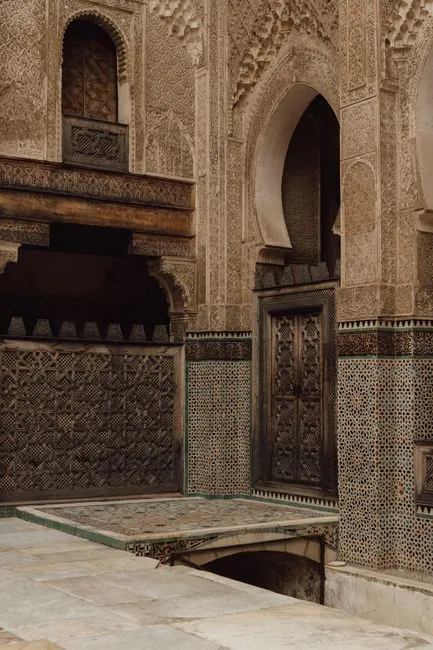
Bou Inania Madrasa
A 14th-century Quranic school (madrasa) built in 1355 under the Marinid Sultan Bou Inan. It is one of the only religious buildings in Fes that non-Muslims can enter, and it is worth every dirham of the entry fee.
The interior is a floor-to-ceiling composition: carved cedar wood canopy above, white marble fountain at the center, Arabic calligraphy running the walls, and intricate zellij (geometric mosaic tile) reaching two meters from the ground. Nothing is casual or incidental — every surface carries an intention.
- Price: 70 MAD (~$7 USD)
- Opening hours: Daily 9:00 AM – 5:00 PM (closed during Friday prayer)
- How long to spend: 30–45 minutes
- Insider Tip: Go before 10 AM. After that, tour groups occupy the central courtyard and photography becomes difficult.
Chouara Tanneries (Dar el-Dbagh)
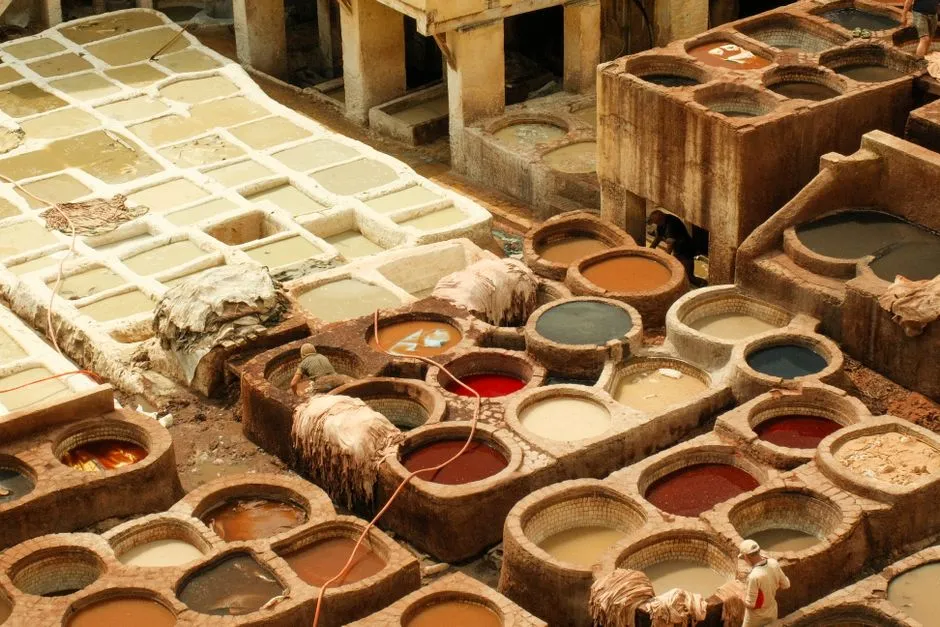
The most photographed spot in Morocco: a sea of circular dyeing pits filled with saffron, poppy, and indigo — surrounded by workers processing hides using methods that have not changed in a millennium. It is a working leather factory, not a heritage display.
- Price: Free to view from the surrounding leather shop terraces.
- How long to spend: 30–45 minutes
- Insider Tip: The smell is strong — pigeon dung and ammonia from the liming pits. Shops hand you fresh mint when you enter. Hold it near your nose. See our complete Chouara Tannery guide for the full picture on access, the shop system, and how to buy leather without getting pushed into a bad deal.
Bab Boujeloud (The Blue Gate)
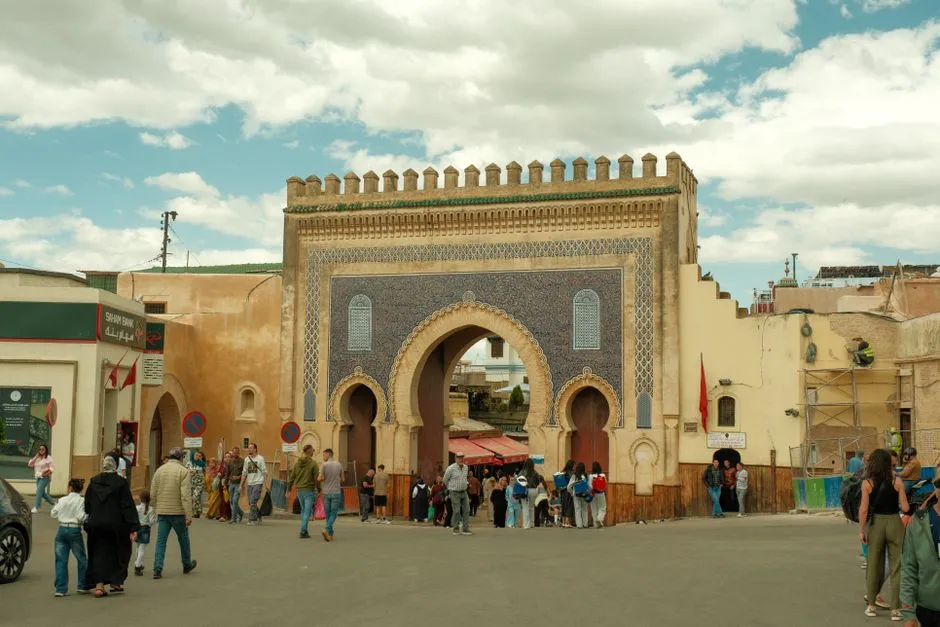
The main ceremonial entrance to Fes el-Bali. Blue on the outside (the color of Fes), green on the inside (the color of Islam). Built in 1913 and now the universally recognized symbol of the city.
- Price: Free
- How long to spend: 10 minutes to photograph; use it as your orientation anchor for the whole medina visit.
Al-Attarine Madrasa
Smaller than Bou Inania but arguably more refined. Located directly next to the Karaouine Mosque, this madrasa was historically used by students from the university — al-Qarawiyyin, founded in 859 AD and considered one of the oldest continuously operating universities in the world.
Every surface — stucco, cedar, zellij — is worked to a level of precision that requires sustained attention to fully appreciate. Spend time looking at the details rather than the whole.
- Price: 20 MAD (~$2 USD)
- Opening hours: Daily 9:00 AM – 6:00 PM
- How long to spend: 20–30 minutes
Borj Nord & Borj Sud (Panoramic Viewpoints)
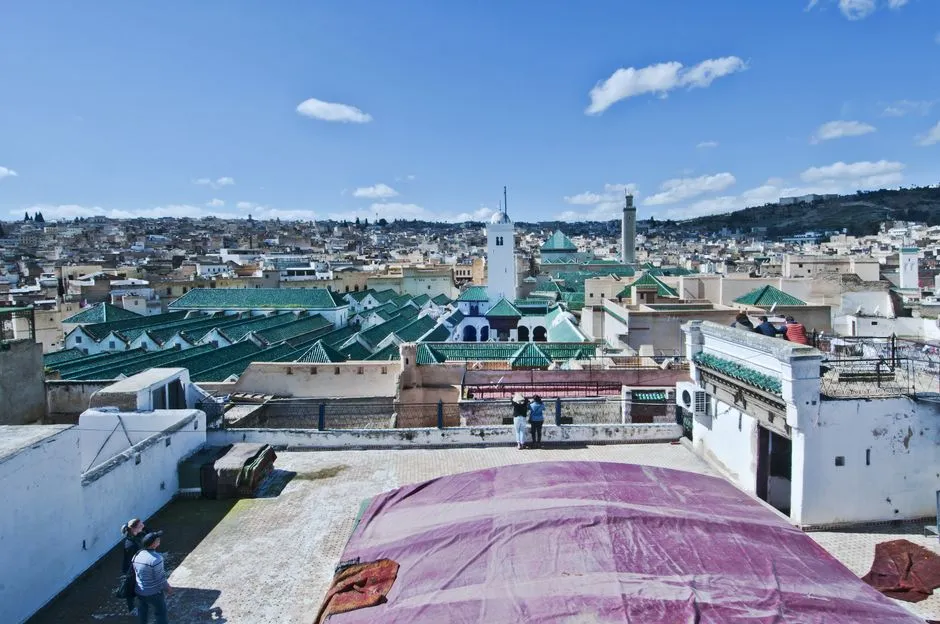
Two fortresses built in the 16th century, positioned on the hills surrounding the medina. The view from Borj Nord over Fes el-Bali — a dense rooftop mosaic interrupted by minarets — provides an essential orientation map for everything you are about to walk through.
- Price: Borj Nord: 20 MAD. Borj Sud: Free exterior only.
- Insider Tip: Borj Nord one hour before sunset gives the best photography light. The medina shifts from white to amber.
The Mellah (Former Jewish Quarter)
Less visited than the western medina, the Mellah sits near Bab Semmarin and carries a distinct architectural character — taller buildings with enclosed wooden balconies, a remnant of the Sephardic Jewish community that lived here for centuries before emigration to Israel and France in the 20th century.
The Ibn Danan Synagogue is still intact and worth visiting if it is open during your stay. The cemetery on the hill above has views over the southern medina and is almost entirely free of tourists.
- Price: Synagogue entry nominal (around 20 MAD if open). Cemetery free.
- Best combined with: A walk through the Bab Semmarin souk — the metalworking quarter, where craftspeople work copper and brass into lanterns and trays.
Where to Eat in Fes
Fes has an unpretentious food culture that rewards people willing to eat where locals eat.
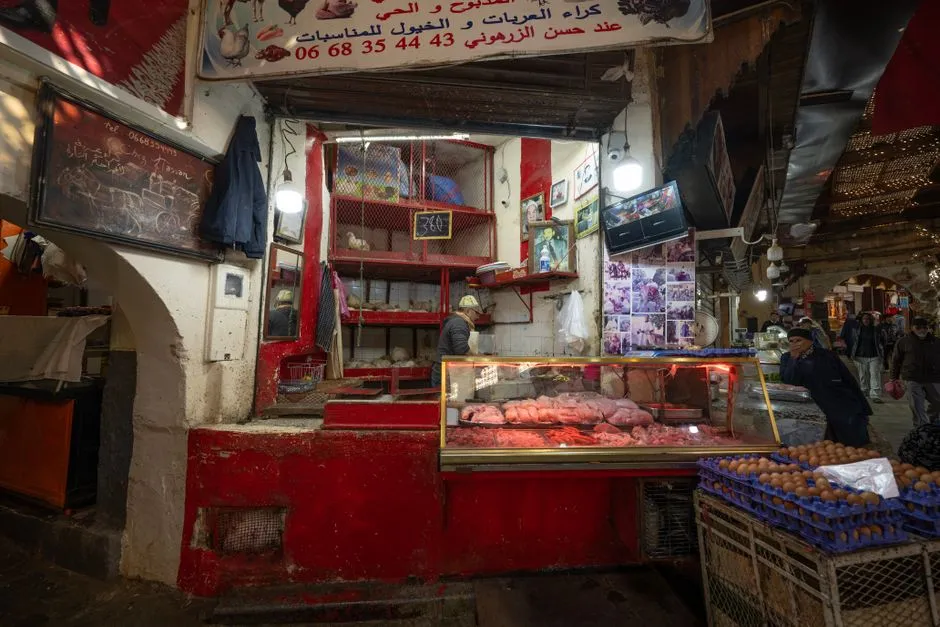
Street Food (Best Value)
The area around Bab Boujeloud and the lower end of Talaa Kebira has consistent street food after 6 PM:
- Bissara — slow-cooked dried fava bean soup, served with olive oil, cumin, and paprika. A bowl costs 5–10 MAD. It is the working-class breakfast and evening dish of Fes, and it is genuinely good.
- Merguez sandwiches — spiced lamb sausage grilled over charcoal and stuffed into a khobz roll. 15–25 MAD.
- Brochettes — lamb or beef skewers, salted and charcoal-grilled. Available from dozens of stalls near the main medina gates.
Sit-Down Options
For a more structured meal, rooftop restaurants around Talaa Kebira offer Moroccan set menus (tagine, couscous, pastilla) at reasonable prices. Expect 80–150 MAD per person for a full meal with bread and a soft drink. Alcohol is not served in medina restaurants — bring your own if needed from the Ville Nouvelle.
Café Clock (near the Talaa Kebira area) is well-regarded, consistently good, and attracts a local-foreigner mixed crowd. Their camel burger has become something of a Fes landmark.
Practical Note
Do not judge a medina restaurant by its façade. Some of the most unremarkable exteriors in Fes open into beautiful courtyard riads with excellent kitchens. Ask your accommodation for their current recommendation — this is exactly the kind of information that changes season to season and that your Riad hosts will know accurately.
Where to Stay in Fes
Fes has two distinct accommodation zones with very different experiences.
Inside Fes el-Bali (Recommended)
Staying in a riad inside the medina means you wake up to the city’s sounds before the tourists arrive, eat breakfast on a rooftop above the medina, and step directly into the alleyways when you leave. The experience is qualitatively different from any hotel.
Good mid-range riads run 400–800 MAD (~$40–80 USD) per night, including breakfast. The breakfast alone — fresh-baked msemen flatbreads, argan oil, honey, amlou (almond-argan paste), fresh orange juice — is worth staying inside for.
What to look for in a riad:
- Location within walking distance of Bab Boujeloud or the tanneries (the main zones)
- Verified reviews on Booking.com or Google — ghost riads are common in Fes
- A host or manager who is responsive before arrival — getting to your riad for the first time, in the dark, through 9,000 alleys, is where a helpful contact makes an enormous difference
Ville Nouvelle (New City)
The modern French-built city outside the medina has standard hotel infrastructure at lower prices. Practical for business travelers or those who find the medina atmosphere too intense. The trade-off is a 15–25 MAD petit taxi ride every time you want to visit the medina — which adds up over two or three days.
What to Buy in Fes
Fes is the artisan capital of Morocco. Several craft traditions are specific to the city.
Fassi ceramics: The blue-and-white pottery style of Fes is among the most recognizable craft output in North Africa. The main pottery workshops are in the Ain Nokbi district, a short taxi ride from the medina. Prices there are significantly lower than in the tourist shops near the tanneries. A decorative plate that sells for 200 MAD in the medina can often be found for 80–120 MAD at the workshop.
Leather: The area around the tanneries. Quality varies considerably — see our Chouara Tannery buying guide for detailed advice on how to assess quality and negotiate effectively.
Brass and copper metalwork: The Bab Semmarin souk (near the Mellah) specializes in handworked metal — lanterns, trays, and decorative objects. Prices are more grounded than in the heavily touristed zones.
Spices and groceries: The Attarine Souk (around the Al-Attarine Madrasa) has the best spice vendors. Saffron from the Talaouine region, ras el hanout blends, and whole dried rose petals are all worth buying. Prices are negotiable for large quantities.
What to avoid buying under pressure: Carpets and textiles involve the highest-pressure sales tactics of any category in Fes. If you want a carpet, identify what you want before you enter a shop, research pricing in advance, and be prepared to walk away multiple times.
Day Trips from Fes
Volubilis (Roman Ruins)
The best-preserved Roman city in North Africa, located approximately 90 minutes from Fes by car. Volubilis was inhabited from the 3rd century BC through the 11th century AD and contains intact mosaic floors, triumphal arches, and the outlines of an entire urban plan. The site is UNESCO-listed and manages visitor numbers reasonably well.
- How to get there: Shared grand taxi from Fes to Meknès, then local taxi to Volubilis. Or a private taxi day trip (~400–600 MAD total, negotiable).
- Entry: Around 70 MAD.
- Best combined with: A stop in Meknès (45 minutes from Fes), a smaller imperial city with excellent monuments and almost no tourist crowds.
Ifrane
Morocco’s answer to a Swiss Alpine town — French-built in the 1930s, with red-tiled roofs, clean streets, and pine forests. Located 68 kilometers from Fes in the Middle Atlas mountains. In winter, it is a ski destination. In summer, it is a cool-air escape from the medina heat. The drive through the cedar forests (where Barbary macaques live and beg for food at the roadside) is worth the trip alone.
- How to get there: Shared grand taxi or CTM bus. Around 1.5 hours.
How to Navigate Fes Medina
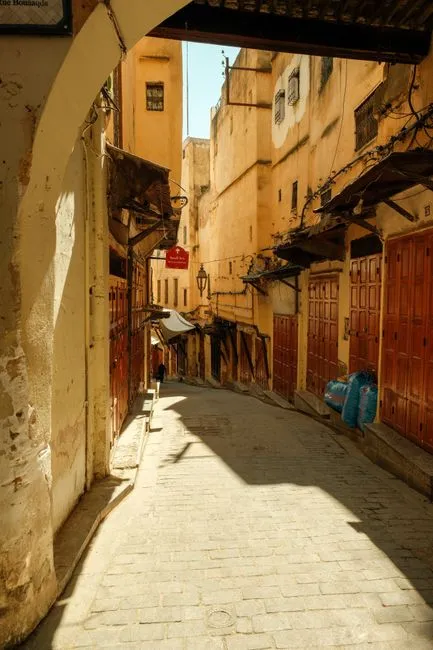
Fes el-Bali is officially the world’s largest car-free urban area. Google Maps is not reliable inside — the narrow alleys and covered sections make GPS positioning inaccurate.
The short version: use Talaa Kebira (the main street) and Bab Boujeloud (the Blue Gate) as your orientation anchors. When lost, ask any shopkeeper “Bab Boujeloud?” and follow the direction they point. Read our dedicated Fes Medina Navigation Guide for full walking routes, offline map recommendations, neighborhood breakdowns, and photography locations.
Practical Information
Getting Around Fes
- Inside the medina: Walking only.
- Between medina and Ville Nouvelle: Petit taxis, 15–25 MAD. Always insist on the meter.
- To/from Airport: Grand taxi (~120 MAD shared, ~200 MAD private) or city bus #16.
Getting There from Other Cities
- From Marrakech: Train (around 5 hours, from 120 MAD second class, book on ONCF.ma)
- From Casablanca: Train (3.5 hours, multiple daily departures)
- From Chefchaouen: CTM bus or shared grand taxi (3–4 hours, see our Fes to Chefchaouen guide)
Best Time to Visit
Spring (March–May) and early autumn (September–October) offer the most favorable conditions: mild temperatures, good photography light, and enough tourist activity that facilities are fully open without the summer crush.
Avoid July and August if you are sensitive to heat — the medina acts as a heat sink and mid-afternoon temperatures inside the alleys can be suffocating.
Frequently Asked Questions
How many days do you need in Fes?
Two full days covers the main medina sights without serious rushing. Three days lets you go deeper — the Andalusian quarter, the Mellah, a day trip to Volubilis — and gives you enough time for the city to make sense rather than just overwhelm. Most travelers who spend only one day regret it.
Is Fes safe for tourists?
Yes. Fes is safe. The primary friction you will encounter is social — touts, fake guides, shop pressure — rather than any physical risk. Stay aware of your surroundings as you would in any dense urban environment. Solo female travelers report that covering shoulders and hair (a lightweight scarf works fine) reduces unsolicited attention significantly.
Do you need a guide to visit Fes?
Not strictly, but a licensed guide for your first half-day is a worthwhile investment. Fes el-Bali is large and the historical context a good guide provides transforms what you are looking at. Book through your Riad — they vet their contacts and have a reputational stake in the quality. Expect 300–500 MAD for a half-day private guide.
What is the currency used in Fes and can I pay by card?
Morocco uses the Moroccan Dirham (MAD). Card payments are accepted in hotels, some restaurants, and a small number of larger shops — but inside the medina, the overwhelming majority of transactions are cash-only. Withdraw MAD from an ATM in the Ville Nouvelle before entering the medina rather than relying on finding one inside.
How do I get from Fes to Chefchaouen?
The CTM bus runs from Fes to Chefchaouen (around 100 MAD, 4 hours). A shared grand taxi is faster (~150 MAD per person, 3 hours) but requires waiting for the taxi to fill. See our complete Fes to Chefchaouen transport guide for current schedules and practical booking advice.
Conclusion
Fes rewards patience. The first hour in the medina is disorienting — the sensory input, the alleys, the touts near the gate. By the second morning, you will have found your landmarks, developed your rhythm, and started seeing the city for what it is: a living, functional medieval city that managed to survive the 20th century more or less intact.
Give it three days. It will surprise you.